

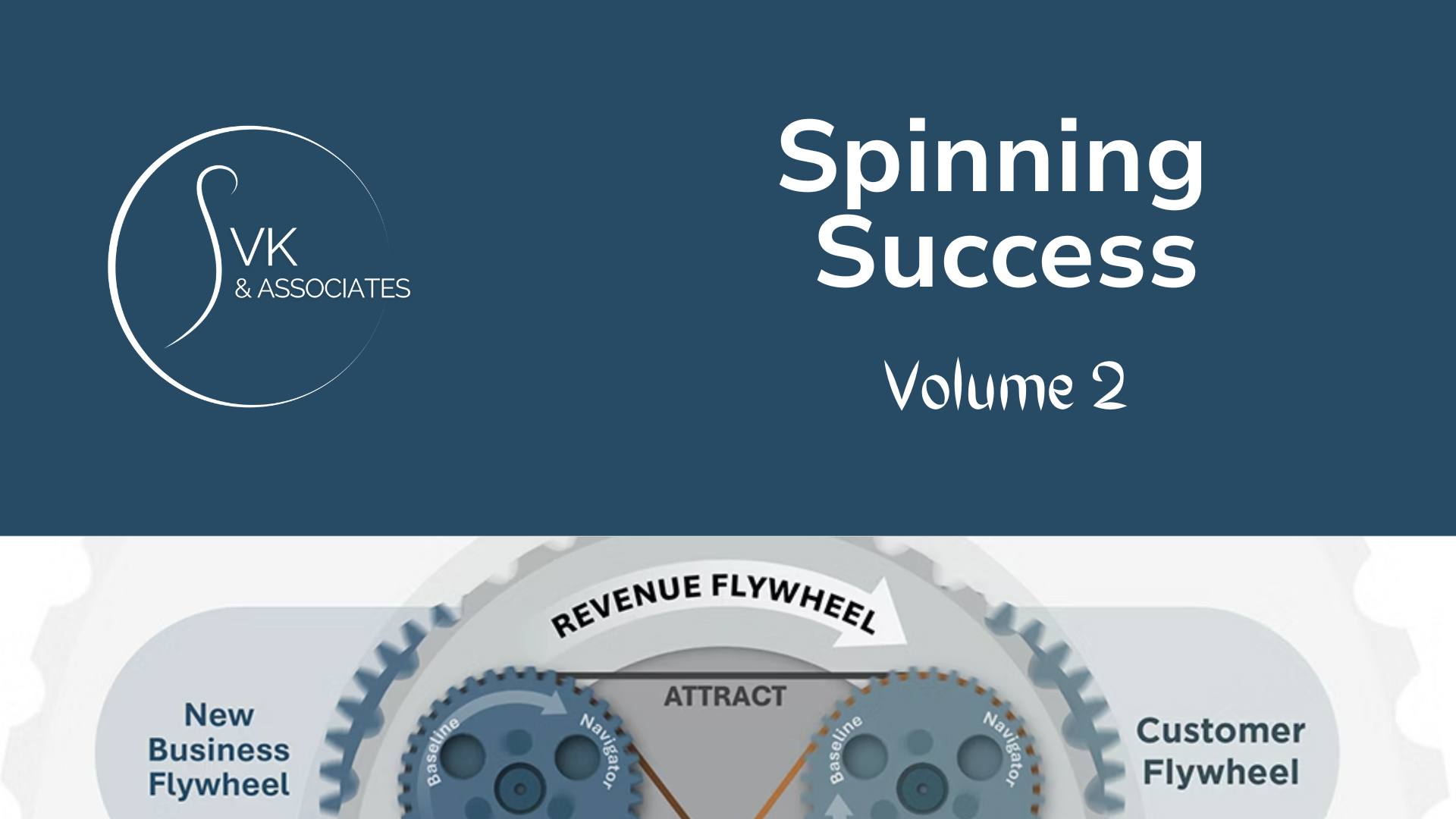
Welcome to our 2nd blog post in the Spinning Success series! We hope you enjoyed our first post, Fresh Ideas For Scaling Your Business, where we introduced our Revenue Flywheel model.
Each post in this series will feature a different part of the flywheel, and we’ll discuss some of the sticky problems and practical solutions we’ve experienced in our tenure working at and helping high tech companies achieve sustainable revenue growth. We hope our stories and tips will inspire you to stay curious and consider how to apply the Revenue Flywheel approach to your business challenges.
Here, we’re taking a deeper dive into the New Business Flywheel in the context of early stage start ups. In our careers, we’ve seen a lot of success (and some failures too) in starting and sustaining early stage companies. We’ve also found we’re talking to a number of professionals who are sub $2M revenue and they want to better understand early marketing strategies that can help build early momentum and accelerate success.
Let’s take a look at a powerful checklist to employ in your start up or early growth phase company.
1. Make Sure Your Unique Value Proposition Is Concise, Compelling, and Differentiated
Can you articulate your unique “solve?”
- Know your customer intimately. Before anything else, define your ideal customer profile (ICP). What are their specific pain points, needs, desires, and behaviors? Where do they spend their time online and offline? A deep understanding allows you to tailor your entire approach — and create sales messaging that resonates.
- Solve an actual problem. Don’t build in isolation. Focus on addressing urgent, expensive problems for your target audience.
- Define the three “Why’s.” These fundamental questions help shape your sales strategy:
-
- Why Change? Why should the prospect consider adopting a new approach to solving the problem your solution addresses?
- Why Now? Why should the prospect take action today, rather than sticking with the status quo? What can they gain from taking advantage of this opportunity — and what do they stand to lose if they don’t?
-
Why Us? Why should the prospect want to buy YOUR solution? What makes it truly distinctive and worth their investment?
- Write a clear value proposition. Home in on what you do, who you do it for, and how you do it. It’s what makes you different and why customers should choose you over existing solutions or doing nothing. Be intentional with your messaging, as it will inform your marketing and sales communications, campaigns, and content.
- Message for your competitive differentiators. Drill into the details to set your solution apart. Knowing how to position your solution’s unique features and benefits — and what makes it special, on the whole–will help prospects see its value over alternatives in the market. This is especially important as you nurture prospects through their sales journey.
2. Do Direct & Personal Outreach to Build Awareness
- In the early stages, “customers are won, not found.” Automated marketing channels won’t work effectively if no one knows who you are.
- Leverage your personal networks. Early sales are going to come from your network or your network’s network. Share your vision and solution with prospective customers and supportive allies who can amplify your message and open doors to new opportunities.
- Hyper-personalize your communications. Craft highly personalized cold emails, LinkedIn messages, or even direct calls. Focus on solving a specific problem for the recipient, not on a generic sales pitch.
- Network your heart out. Attend industry events, meetups, and conferences (even as an attendee rather than an exhibitor to save costs). Share thoughts and ideas with potential clients, partners, and mentors. Not only do these person-to-person interactions help build crucial initial relationships, but they can lead to invaluable, long-term connections.
- Get involved. You, as the founder, should be personally involved in early sales and customer interactions. This provides invaluable qualitative feedback that shapes the product and builds trust. Early customers are betting on your ability to solve their evolving problems, a commitment only founders can credibly make.
3. Build Trust (Your Most Valuable Currency)
At the beginning, trust is what you have to offer and it will be valued.
- Get social, early and often.
- Testimonials and Reviews: Actively solicit testimonials from early customers. Showcase them prominently on your website and marketing materials.
- Case Studies: Document how your product/service solved specific problems for your initial clients. This provides concrete evidence of your value.
- User-Generated Content (UGC): Encourage satisfied customers to share their experiences. This is powerful, authentic marketing.
- Demonstrate honesty. Be honest about being a new business. Instead of trying to invent qualities you don’t have, highlight your actual advantages as a startup (e.g., flexibility, fresh insights, speed, up-to-date technology).
- Commit to exceptional customer service. “Every customer interaction is an opportunity to create an ambassador for your brand.” In the early days, going above and beyond for your first customers can lead to invaluable word-of-mouth referrals.
- Show the human element. Include photos and videos of your team members. Sign off emails with your signature. Personal touches like these help customers feel they are dealing with real people, not a faceless company.
Pro tip: “Listen to your customers — they will tell you a lot.” Reflecting on his track record of client success, entrepreneur Doug Berg shared with us that he aims to develop a level of client connection where he’s the first call that customers make when they need a solution to a new problem. “It suggests a level of confidence in us and our past performance,” he said. “It’s important to always be listening.”
4. Lean Into Lean Digital Marketing
While direct sales are critical, digital channels will build your funnel — and your new business flywheel.
- Content marketing.
- Educate: Create blog posts, articles, or videos that address your target audience’s questions, problems, and interests. This establishes you as an authority and drives organic traffic.
- Focus on long-tail keywords: Target specific, less competitive keywords relevant to your niche. This allows you to rank faster without an established domain authority.
- Repurpose content: Create one piece of valuable content (e.g., a long-form blog post) and repurpose it into social media snippets, email newsletter content, and even short videos.
- Strategic social media.
- Choose Wisely: Focus on 1-2 platforms where your target audience is most active.
- Engage in communities: Participate in relevant online communities (e.g., LinkedIn groups, Reddit subreddits, Facebook groups). Offer genuine value.
- Leverage your founder’s personal brand: Founders can use their personal LinkedIn profiles or other social channels to share insights, engage in discussions, and subtly promote their venture.
- Email marketing. Yes, it still works. Collect email addresses from early interactions and website visitors, and send valuable content, product updates, and personalized offers to nurture leads and build relationships.
- Strategic partnerships & “other people’s audiences” (OPA).
- Collaborate with complementary businesses: Partner with non-competing businesses that serve a similar target audience. This can involve cross-promotion, joint webinars, or shared content.
- Guest blogging/podcasting: Offer to create content for established blogs or podcasts in your niche. This exposes you to their pre-built audience, who already trust the platform’s owner.
5. Just Start!
- Don’t worry — your minimum viable product (MVP) is OK. Don’t wait for perfection. Launch your MVP that solves a core problem and then iterate based on customer feedback. This is central to the lean startup methodology.
- Depend on constant feedback. Actively seek feedback from early users, and use it to refine your product, service, and messaging.
- Measure and adapt. Track key performance indicators (KPIs) for every marketing activity. What’s working? What isn’t? Be agile and willing to pivot your strategies based on data. By focusing on these strategies, startups can effectively overcome the challenge of lacking an established brand and build a loyal customer base organically, paving the way for future brand growth.
We hope this helps as you’re thinking about early growth strategies.
Ready to Build Your Flywheel?
If you are in a similar place and want to see how your own revenue engine stacks up? We’re offering a free initial assessment to help you diagnose your current flywheel and uncover hidden growth opportunities. Thanks for joining us. We can’t wait to help you spin up your own success.
ps… We’d love to hear from you! Sign up for our blog or contact us directly.
Sources: Reddit; Trust Signals Marketing; Constant Contact; HubSpot